
Planktonic Food Webs and Energy Transfer
Planktonic Food Webs and Energy Transfer
Planktonic Food Webs and Energy Transfer
Planktonic food webs play a crucial role in aquatic ecosystems, serving as the foundation of the marine food chain. Understanding the dynamics of energy transfer within these intricate systems is essential for comprehending the functioning and stability of marine ecosystems. This module will delve into key terms and vocabulary related to planktonic food webs and energy transfer, providing a comprehensive overview of the fundamental concepts in plankton ecology.
Plankton: Plankton encompass a diverse group of organisms that drift or float in aquatic environments, unable to swim against currents. They are classified into two main categories: phytoplankton, which are primary producers capable of photosynthesis, and zooplankton, which are consumers feeding on phytoplankton or other zooplankton.
Primary Production: Primary production refers to the process by which autotrophic organisms, such as phytoplankton, convert sunlight into chemical energy through photosynthesis. This energy serves as the foundation of the food web, fueling the growth and survival of higher trophic levels.
Trophic Levels: Trophic levels represent the hierarchical levels in a food chain, indicating the position of organisms based on their feeding relationships. Primary producers occupy the first trophic level, followed by herbivores, primary consumers, secondary consumers, and so forth, up to the top predators.
Energy Transfer: Energy transfer occurs as energy flows through different trophic levels within a food web. Each transfer results in a loss of energy, with only a fraction being passed on to the next trophic level. This phenomenon is known as ecological efficiency and influences the overall productivity and stability of the ecosystem.
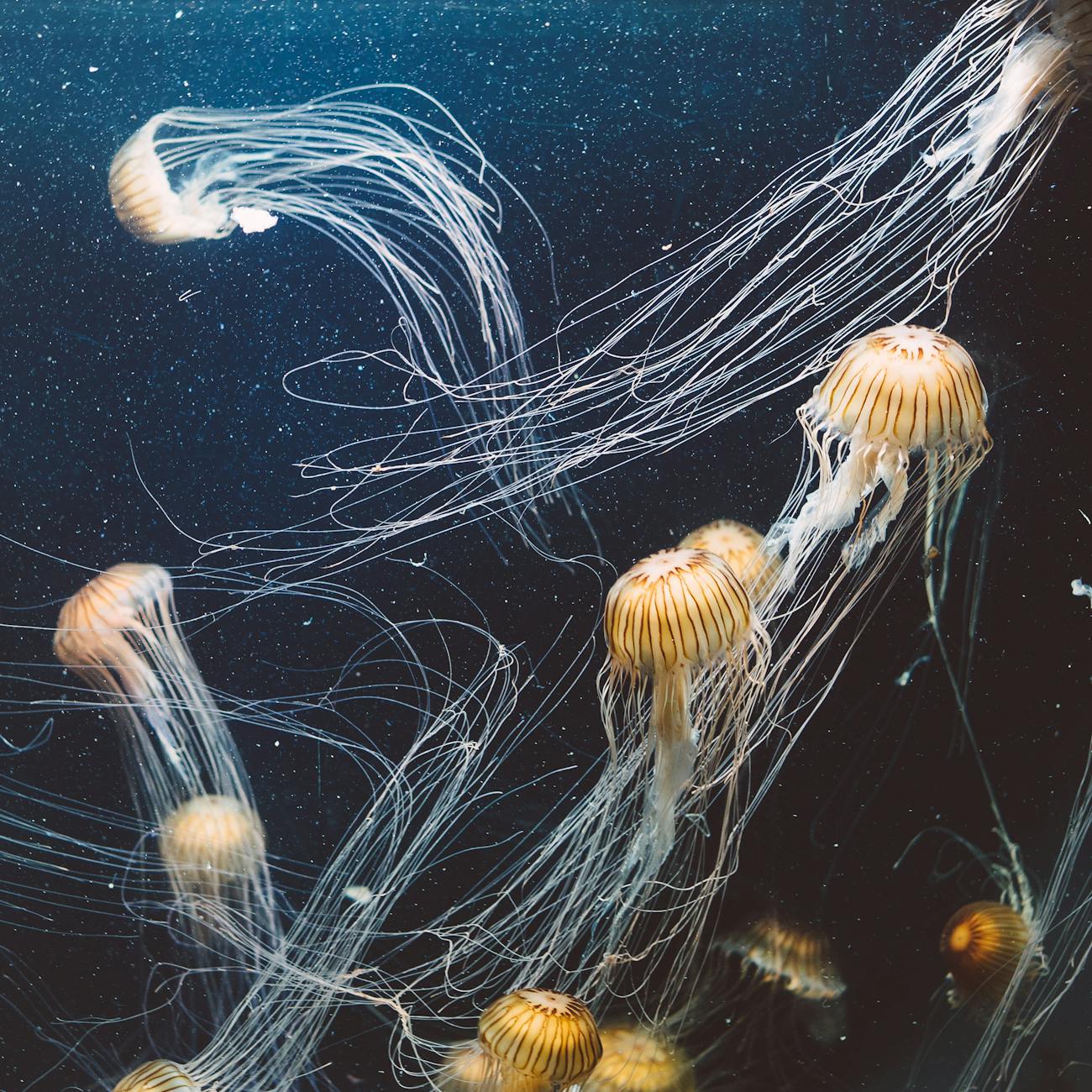
Grazing: Grazing refers to the consumption of phytoplankton by herbivorous zooplankton. Grazers play a vital role in controlling phytoplankton abundance and regulating primary production rates. Examples of grazers include copepods, krill, and small jellyfish.
Predation: Predation involves the consumption of one organism (predator) by another (prey) for energy acquisition. Predators in planktonic food webs range from small zooplankton to larger carnivorous fish and marine mammals. The interaction between predators and prey influences population dynamics and community structure.
Microbial Loop: The microbial loop is a pathway in aquatic ecosystems where dissolved organic matter is recycled by heterotrophic bacteria and protists. These microorganisms consume organic material, including unused phytoplankton exudates and detritus, converting it into microbial biomass that can be consumed by higher trophic levels.
Detritus: Detritus consists of dead organic matter, such as decaying phytoplankton cells, zooplankton fecal pellets, and other organic debris. Detritus serves as a critical source of energy and nutrients for detritivores and decomposers, contributing to the recycling of organic material in marine ecosystems.
Secondary Production: Secondary production refers to the biomass generated by heterotrophic organisms, such as zooplankton, through the consumption of primary producers or other consumers. Secondary production plays a key role in transferring energy up the food chain and sustaining higher trophic levels.
Food Web Complexity: Food web complexity refers to the interconnectedness and diversity of trophic interactions within an ecosystem. A complex food web involves multiple trophic levels, species interactions, and pathways of energy flow, enhancing ecosystem resilience and stability.
Harmful Algal Blooms (HABs): Harmful algal blooms are rapid increases in the population of harmful algae species, leading to detrimental effects on marine ecosystems and human health. HABs can produce toxins that impact fish, shellfish, and other marine organisms, posing risks to both aquatic life and human consumption.
Nutrient Cycling: Nutrient cycling involves the movement and recycling of essential nutrients, such as nitrogen, phosphorus, and carbon, within an ecosystem. Plankton play a critical role in nutrient cycling by assimilating and releasing nutrients through their metabolic processes, influencing primary production and ecosystem dynamics.
Climate Change Impacts: Climate change poses significant challenges to planktonic food webs and energy transfer in marine ecosystems. Rising sea temperatures, ocean acidification, and changing nutrient availability can alter plankton community structure, affecting energy flow, species interactions, and ecosystem functioning.
Challenges and Future Directions: Studying planktonic food webs and energy transfer presents various challenges, including the complexity of trophic interactions, the dynamic nature of marine environments, and the need for interdisciplinary research approaches. Future directions in plankton ecology involve integrating advanced technologies, modeling techniques, and long-term monitoring to enhance our understanding of food web dynamics and ecosystem responses to environmental changes.
In conclusion, planktonic food webs and energy transfer are essential components of marine ecosystems, shaping ecological processes and supporting biodiversity. By exploring the key terms and vocabulary outlined in this module, researchers and practitioners can gain insights into the intricate relationships and dynamics of plankton ecology, paving the way for informed conservation and management strategies in the face of global environmental challenges.
Key takeaways
- This module will delve into key terms and vocabulary related to planktonic food webs and energy transfer, providing a comprehensive overview of the fundamental concepts in plankton ecology.
- They are classified into two main categories: phytoplankton, which are primary producers capable of photosynthesis, and zooplankton, which are consumers feeding on phytoplankton or other zooplankton.
- Primary Production: Primary production refers to the process by which autotrophic organisms, such as phytoplankton, convert sunlight into chemical energy through photosynthesis.
- Trophic Levels: Trophic levels represent the hierarchical levels in a food chain, indicating the position of organisms based on their feeding relationships.
- This phenomenon is known as ecological efficiency and influences the overall productivity and stability of the ecosystem.
- Grazers play a vital role in controlling phytoplankton abundance and regulating primary production rates.
- Predation: Predation involves the consumption of one organism (predator) by another (prey) for energy acquisition.