
Penguin Behavior and Enrichment
Expert-defined terms from the Advanced Skill Certificate in Penguin Rehabilitation course at London School of Planning and Management. Free to read, free to share, paired with a professional course.
Penguin Behavior and Enrichment #
Penguin Behavior and Enrichment
Antarctic #
Antarctic
- Explanation: The region surrounding the South Pole, home to various species of… #
Penguins in the Antarctic face unique challenges due to the extreme cold and harsh weather conditions.
Behavioral Enrichment #
Behavioral Enrichment
- Explanation: Behavioral enrichment involves providing stimuli and activities t… #
This helps prevent boredom, stimulate natural behaviors, and improve overall well-being. Examples of behavioral enrichment for penguins include puzzle feeders, swimming pools, and simulated hunting activities.
Breeding Behavior #
Breeding Behavior
- Explanation: Breeding behavior in penguins involves complex rituals and displa… #
Different species of penguins exhibit unique breeding behaviors, such as the elaborate courtship dances of the Gentoo Penguin or the communal nesting sites of the Chinstrap Penguin.
Chinstrap Penguin #
Chinstrap Penguin
- Explanation: The Chinstrap Penguin is a species of penguin found in the Antarc… #
Known for the distinctive thin black band under its chin, this penguin species exhibits unique behaviors such as vocalizations and group nesting.
Cognitive Enrichment #
Cognitive Enrichment
- Explanation: Cognitive enrichment involves stimulating a penguin's mental abil… #
Providing cognitive enrichment activities can help penguins develop new skills, reduce stress, and increase their overall cognitive function.
Communication #
Communication
- Explanation: Penguins communicate with each other through a combination of voc… #
Different species of penguins have unique ways of communicating, such as the braying call of the Emperor Penguin or the head shaking display of the Adélie Penguin.
Emperor Penguin #
Emperor Penguin
- Explanation: The Emperor Penguin is the largest species of penguin and is know… #
Emperor Penguins exhibit unique behaviors such as huddling together for warmth, long-distance swimming, and synchronized breeding cycles.
Environmental Enrichment #
Environmental Enrichment
- Explanation: Environmental enrichment involves creating a habitat for captive… #
Providing features such as rocks, water pools, and nesting materials can help penguins exhibit natural behaviors, reduce stress, and improve their overall well-being.
Foraging Behavior #
Foraging Behavior
- Explanation: Foraging behavior in penguins involves hunting for prey in the wa… #
Different species of penguins use various feeding strategies, such as diving for fish, catching squid, or filtering krill. Foraging behavior is essential for penguins to maintain their energy levels and survive in the wild.
Gentoo Penguin #
Gentoo Penguin
- Explanation: The Gentoo Penguin is a species of penguin found in the subantarc… #
Known for its distinctive white patch above the eye, the Gentoo Penguin exhibits unique behaviors such as fast swimming speeds, deep diving capabilities, and vocal courtship displays.
Group Behavior #
Group Behavior
- Explanation: Penguins exhibit various group behaviors, such as forming colonie… #
Group behavior in penguins helps them coordinate activities, protect against predators, and communicate with other members of the group.
Habituation #
Habituation
- Explanation: Habituation involves exposing captive penguins to new stimuli or… #
Habituation techniques can help penguins adjust to their surroundings, interact with caregivers, and participate in enrichment activities more easily.
King Penguin #
King Penguin
- Explanation: The King Penguin is a species of penguin found in the subantarcti… #
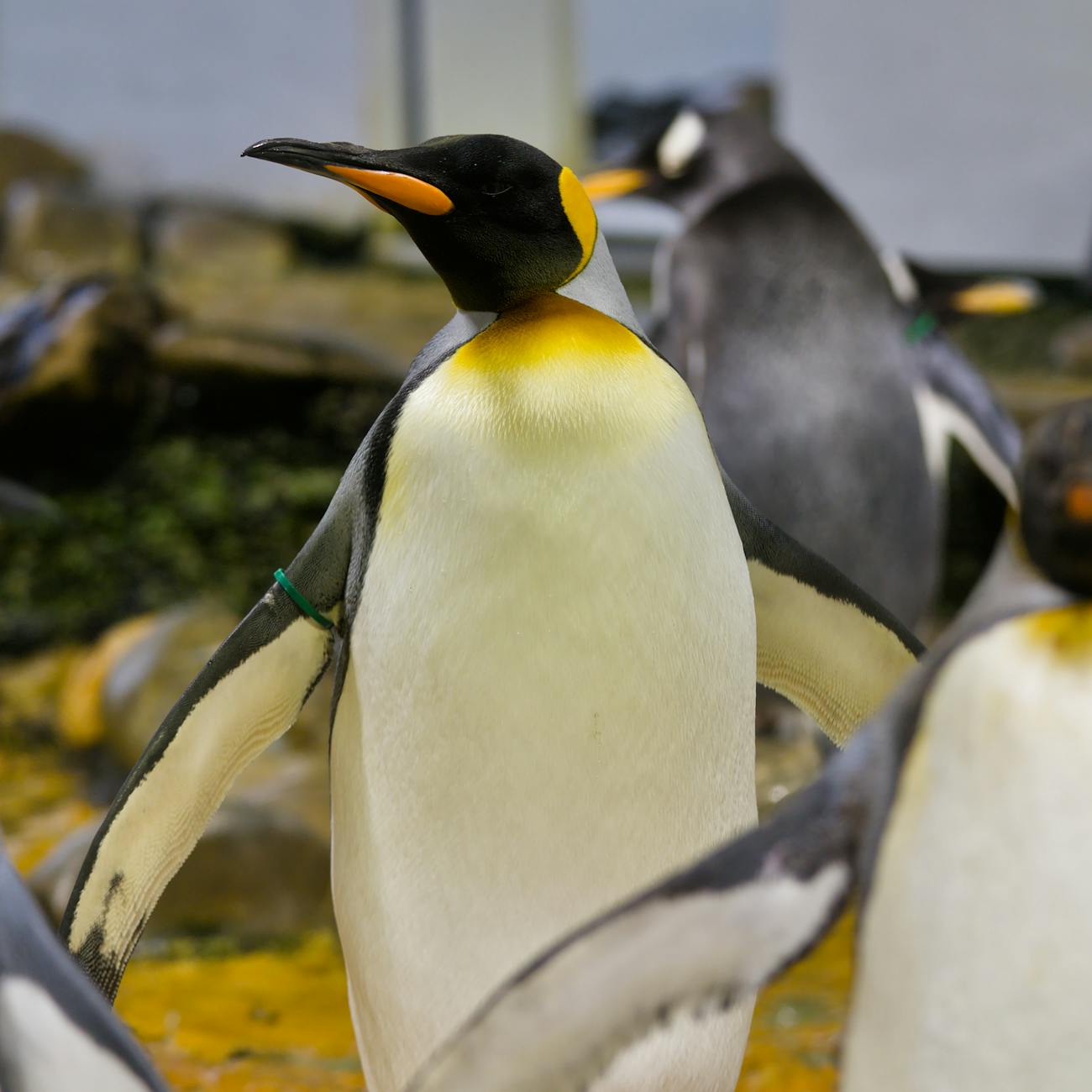
Known for its colorful plumage and large size, the King Penguin exhibits unique behaviors such as molting, fasting during the chick-rearing period, and forming large breeding colonies.
Migration #
Migration
- Explanation: Some species of penguins engage in migration, moving between bree… #
Migration patterns vary among penguin species, with some traveling long distances over land and sea to reach their destinations.
Molt #
Molt
- Explanation: Molt refers to the process of shedding old feathers and growing n… #
Molting is essential for maintaining waterproofing, insulation, and aerodynamics. During molt, penguins may fast and spend more time on land until their new feathers are fully grown.
Nesting Behavior #
Nesting Behavior
- Explanation: Nesting behavior in penguins involves building nests from rocks,… #
Different species of penguins exhibit unique nesting behaviors, such as the stone-stealing behavior of the Adélie Penguin or the burrow-nesting of the Magellanic Penguin.
Prey Capture #
Prey Capture
- Explanation: Prey capture refers to the process of hunting, catching, and cons… #
Penguins use various techniques such as diving, chasing, and filtering to capture prey such as fish, squid, and krill. Prey capture is essential for penguins to obtain nutrients and energy for survival.
Rockhopper Penguin #
Rockhopper Penguin
- Explanation: The Rockhopper Penguin is a species of crested penguin found on s… #
Known for its distinctive crest of yellow feathers, the Rockhopper Penguin exhibits unique behaviors such as hopping over rocks, vocalizing loudly, and forming large breeding colonies.
Sea Ice #
Sea Ice
- Explanation: Sea ice plays a crucial role in the Antarctic ecosystem and is es… #
Penguins use sea ice for breeding, resting, and foraging, and rely on it as a platform for accessing food sources in the surrounding waters.
Social Behavior #
Social Behavior
- Explanation: Penguins are social birds that engage in various behaviors to com… #
Social behavior in penguins includes activities such as preening, vocalizations, and displays of aggression or submission.
Species #
Specific Behavior
- Explanation: Species-specific behavior refers to unique behaviors exhibited by… #
Each species of penguin has adapted to its environment through specific behaviors such as diving depths, swimming speeds, and breeding strategies.
Threat Displays #
Threat Displays
- Explanation: Penguins use threat displays to communicate aggression or dominan… #
Threat displays may involve vocalizations, body postures, or physical interactions such as pecking or flapping wings. Penguins use threat displays to resolve conflicts, defend territories, and attract mates.
Underwater Behavior #
Underwater Behavior
- Explanation: Penguins are highly adapted for underwater life and exhibit uniqu… #
Underwater behavior in penguins includes activities such as deep dives, fast swimming speeds, and agile maneuvers to catch fish, squid, and other marine organisms.
Vocalizations #
Vocalizations
- Explanation: Penguins use vocalizations to communicate with each other and to… #
Different species of penguins have distinct vocalizations, such as the trumpeting call of the King Penguin or the braying call of the Emperor Penguin. Vocalizations play a crucial role in penguin communication, especially during courtship, nesting, and foraging activities.
Waddle #
Waddle
- Explanation: The waddle is a distinctive walking style exhibited by penguins o… #
Penguins have short legs and a streamlined body shape, which makes them waddle from side to side as they walk. The waddle helps penguins conserve energy and maintain balance on rocky or icy surfaces.
Yawning #
Yawning
- Explanation: Yawning is a common behavior observed in penguins and is believed… #
Penguins may yawn to communicate with other members of their group, release stress or tension, or regulate their body temperature. Yawning can also be a sign of relaxation or drowsiness in penguins, especially during periods of rest or inactivity.