
Safe Space Body Awareness
Safe Space is the foundational concept that defines a physical and emotional environment where families feel protected, respected, and free to explore movement without fear of judgment or harm. In the context of a baby dance class, a safe s…
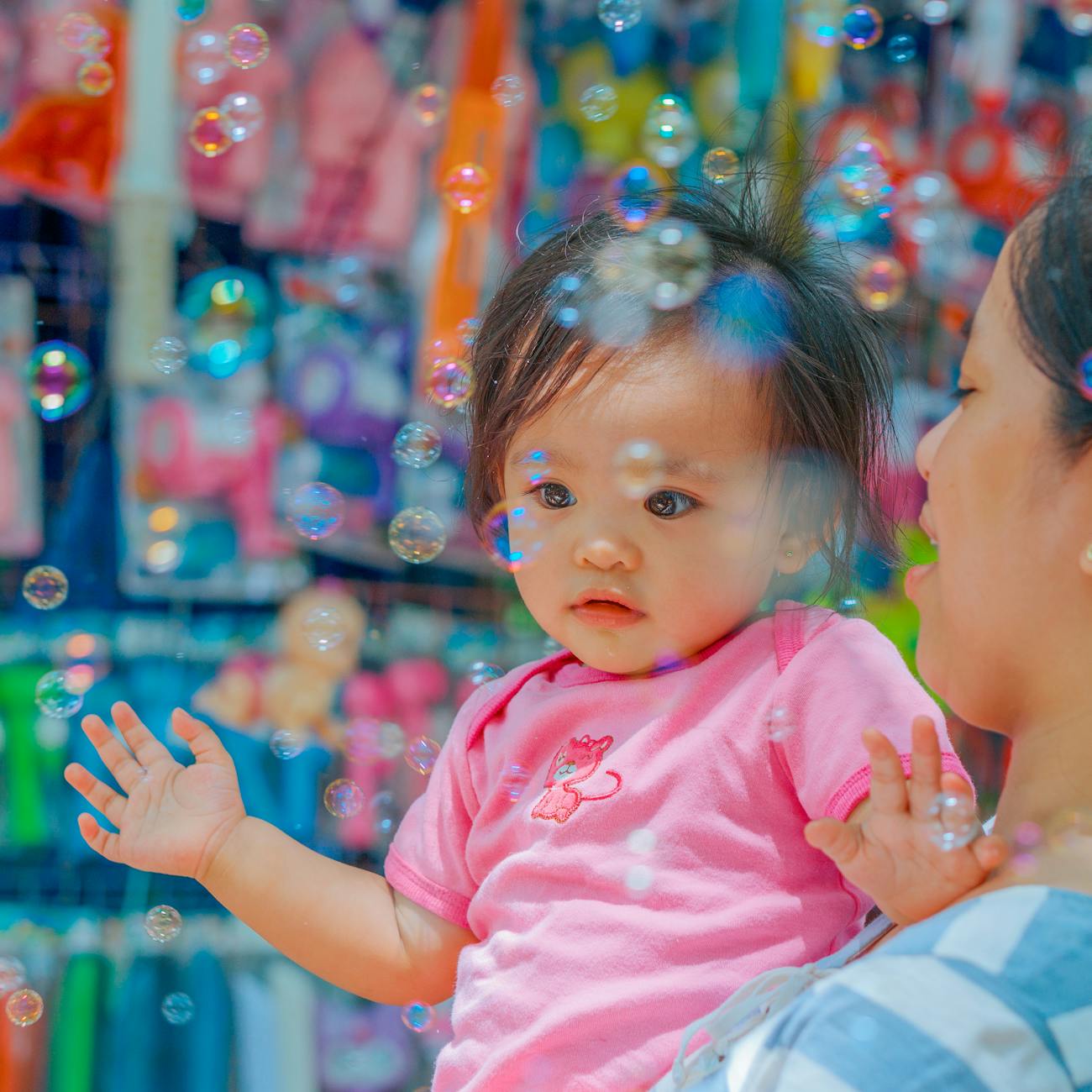
Safe Space is the foundational concept that defines a physical and emotional environment where families feel protected, respected, and free to explore movement without fear of judgment or harm. In the context of a baby dance class, a safe space is created by clear guidelines, consistent routines, and a supportive instructor who models calm energy. For example, when a parent is unsure about a new stretch, the instructor gently reassures them, reinforcing that experimentation is welcomed and mistakes are part of learning. Practical application involves setting up the studio with soft flooring, ensuring adequate lighting, and arranging the room so that each family has enough personal space. A common challenge is managing the diverse comfort levels of participants; some families may be more reserved, while others are eager to try expressive movements. In such cases, the instructor must balance encouragement with respect for individual boundaries, offering alternative options that maintain the inclusive atmosphere.
Body Awareness refers to the conscious perception of one’s own bodily sensations, positions, and movements. It is the ability to sense where each part of the body is in space, how it feels, and how it interacts with the environment. In baby dance, body awareness is cultivated through gentle prompting, such as asking parents to notice the weight of their baby’s torso as they lean forward. This heightened perception helps caregivers respond more intuitively to their child’s cues. A practical exercise is the “hand‑to‑hand” activity, where the parent places one hand on the baby’s back and the other on the baby’s chest, feeling the rise and fall of breath. A challenge may arise when a caregiver has limited proprioceptive feedback due to injury; the instructor can adapt by using visual cues or verbal descriptions to supplement the sensory experience.
Kinesthetic Learning is a learning style that emphasizes movement and physical activity as primary means of acquiring knowledge. Families who engage in kinesthetic learning benefit from hands‑on practice rather than passive observation. In a baby dance class, this might involve parents mirroring the instructor’s gestures while holding their child, thereby internalizing the rhythm through motion. An example is the “sway‑and‑clap” routine, where participants sway side to side and clap in time with a gentle beat, reinforcing the concept of rhythm through bodily motion. A practical challenge is ensuring that the music’s tempo matches the developmental stage of the children; too fast a tempo can overwhelm young listeners, while a tempo that is too slow may reduce engagement. Instructors can address this by adjusting the beat and offering slower variations for families who need more time to process the movement.
Proprioception is the sense that informs the brain about the position and movement of the body’s parts without visual input. It is sometimes called the “body‑sense” and is essential for balance, coordination, and safe movement execution. In the baby dance setting, proprioceptive cues help parents gauge how much support their child needs while attempting new poses. A practical activity is the “rock‑and‑roll” exercise: The parent gently rocks the baby back and forth while maintaining a stable stance, allowing the caregiver to feel the baby’s weight shift through their own muscles. This reinforces the parent’s sense of stability and the baby’s developing core strength. One challenge is that some children may be hypersensitive to proprioceptive input, reacting negatively to certain pressures. In such cases, the instructor can modify the activity by reducing the amplitude of the motion or using a softer surface to decrease sensory intensity.
Tactile Sensitivity describes how the skin perceives touch, pressure, temperature, and vibration. Babies develop tactile sensitivity at different rates, and caregivers must be attuned to signs of comfort or discomfort. In a class, the instructor may demonstrate gentle stroking along a child’s arms to illustrate calming touch. Practical application includes using a soft blanket to create a comforting tactile cue before a dance segment, helping the baby associate the material with safety. A common challenge is that some children may experience sensory overload when exposed to multiple textures simultaneously. In response, instructors can limit the number of tactile elements present in the room and provide a quiet corner with a single, soothing fabric for families who need a break.
Mirror Neurons are brain cells that activate both when an individual performs an action and when they observe another performing the same action. This neural mechanism underlies empathy and learning through imitation. In baby dance, mirror neurons enable parents to internalize the instructor’s movements and translate them into nurturing gestures for their child. For instance, when a caregiver watches the instructor gently lift a baby’s arms, the caregiver’s mirror neurons fire, prompting them to replicate the motion with their own child. A practical example is the “mirror‑dance” segment, where each family mirrors the instructor’s choreography, reinforcing the connection between observation and action. A challenge can arise when a caregiver feels self‑conscious about being observed, potentially inhibiting natural imitation. Instructors can mitigate this by fostering a non‑judgmental environment and emphasizing that the focus is on shared joy rather than performance perfection.
Alignment refers to the proper positioning of the body’s skeletal structure to promote efficient movement and prevent strain. Proper alignment in a baby dance class helps caregivers maintain a neutral spine while supporting their child, reducing the risk of injury. For example, when lifting a baby for a gentle spin, the parent should keep the shoulders relaxed, engage the core, and avoid arching the lower back. A practical method for teaching alignment is the “wall‑check,” where participants stand with their back against a wall to feel the natural curvature of the spine and then practice moving away while maintaining that awareness. Challenges may include caregivers who have ingrained poor posture habits; these individuals may need additional cues, such as tactile reminders (e.G., A light tap on the shoulders) to reinforce correct alignment.
Centering is the process of focusing attention on the body’s core, both physically and mentally, to achieve stability and calm. In the context of baby dance, centering helps parents stay grounded while they move with their child, preventing sudden jerks that could startle the baby. A simple centering exercise involves taking three slow breaths, feeling the belly rise and fall, and visualizing a steady axis through the torso. Practically, before each dance segment, the instructor may lead a brief centering routine to align the group’s energy. One challenge is that families with infants who are highly reactive may find it difficult to maintain a centered posture; the instructor can address this by providing supportive props, such as a sturdy chair, to help the caregiver feel anchored.
Grounding is the technique of establishing a physical connection with the floor or a stable surface to enhance balance and reduce anxiety. Grounding is particularly valuable for caregivers who may feel uncertain about supporting a moving baby. A practical grounding activity is the “feet‑firm” drill, where participants stand barefoot, spread their feet hip‑width apart, and press the heels into the floor while breathing deeply. This creates a sense of stability that translates into smoother movements with the child. Challenges can emerge when the studio floor is slippery or when caregivers wear shoes that hinder tactile feedback. Instructors can mitigate these issues by providing non‑slip mats and encouraging participants to practice barefoot when appropriate.
Breath Awareness involves paying attention to the rhythm, depth, and quality of one’s breathing. Breath awareness is a tool for regulating emotional states and improving movement fluidity. In a baby dance class, instructors often cue caregivers to inhale as they lift the baby and exhale as they lower them, creating a synchronized breathing pattern that promotes calm. A practical example is the “bubble‑breath” exercise: Participants imagine blowing a bubble with each exhale, visualizing gentle release of tension. A challenge may arise if a caregiver is experiencing stress or anxiety, causing shallow or rapid breathing. The instructor can address this by offering a short guided breathing pause before the activity, allowing the caregiver to reset their respiratory rhythm.
Spatial Awareness is the ability to understand the position of oneself and others within a given area. It includes recognizing personal space, the location of objects, and the movement pathways of other participants. For baby dance, spatial awareness ensures that families move without colliding and that the baby’s safety zone is maintained. An example activity is the “circle‑walk,” where each family walks a slow circle around the room, maintaining a set distance from neighboring circles. This practice reinforces awareness of one’s own space and that of others. A challenge is that young children may unintentionally breach personal space, prompting caregivers to quickly adjust. Instructors can teach gentle redirection techniques, such as using verbal cues (“let’s keep a little distance”) combined with a small hand gesture to guide the child back within safe limits.
Personal Boundaries refer to the physical and emotional limits that individuals set to protect their sense of safety and comfort. In a baby dance environment, personal boundaries include the amount of touch a caregiver is comfortable giving, the proximity to other families, and the level of vocal interaction. Clear communication of these boundaries is essential for maintaining mutual respect. A practical method for establishing boundaries is the “boundary‑check” conversation at the start of each class, where participants verbally share any specific needs (e.G., “I prefer minimal physical contact with other families”). A challenge may occur when a child’s curiosity leads them to cross a caregiver’s expressed boundary; the instructor can provide strategies for gentle redirection, such as offering a toy or guiding the child’s hand away calmly.
Consent in the context of a baby dance class is the explicit or implicit agreement to engage in a particular activity, especially when it involves touch or movement. Consent respects both the adult’s and the child’s autonomy, even though infants cannot verbalize consent. Caregivers demonstrate consent by observing the baby’s reactions and adjusting accordingly. For instance, if a baby turns their head away during a gentle sway, the parent interprets this as a signal to pause or modify the motion. A practical approach is the “check‑in” routine, where the instructor pauses after each new movement and asks caregivers to assess their child’s comfort level. Challenges include cultural differences in interpreting non‑verbal cues; instructors can address this by providing universal guidelines and encouraging open dialogue about individual interpretations of consent.
Non‑Verbal Communication encompasses facial expressions, body language, gestures, and eye contact that convey messages without words. In baby dance, non‑verbal communication is a vital channel for understanding a child’s emotional state and for building a trusting relationship. An example of effective non‑verbal communication is the use of a soft smile and gentle hand placement on a baby’s back to signal reassurance during a new movement. Practically, teachers can model these cues and invite caregivers to mirror them, reinforcing the habit of attentive observation. A challenge can arise when a caregiver misreads a baby’s non‑verbal signals, perhaps interpreting a frown as discomfort when it is simply concentration. Instructors can help by teaching caregivers to look for clusters of cues (e.G., Facial expression combined with body tension) before making an interpretation.
Touch Guidelines are a set of best practices that outline appropriate, safe, and respectful ways to use physical contact in a learning environment. Touch guidelines ensure that all participants feel secure and that the contact supports the learning objectives. In a baby dance class, guidelines may include: Always ask the caregiver before touching a baby, use open‑hand strokes rather than firm pressure, and maintain a neutral palm orientation. A practical demonstration might involve the instructor showing a “light‑press” technique on a dummy to illustrate appropriate pressure. Challenges can surface when caregivers have differing comfort levels with touch; some may prefer minimal contact, while others embrace more tactile interaction. Instructors can accommodate these preferences by offering alternative methods, such as using a supportive prop (e.G., A rolled towel) instead of direct hand contact.
Emotional Safety is the assurance that participants can express feelings without fear of ridicule, dismissal, or emotional harm. In a baby dance class, emotional safety encourages caregivers to share anxieties, successes, and concerns openly. For example, a parent might express nervousness about a new lift; the instructor validates the feeling and offers reassurance, thereby fostering trust. A practical tool for maintaining emotional safety is the “feelings circle,” where each family briefly shares one word describing their current emotional state, creating a supportive group dynamic. A challenge may arise when a participant’s emotional expression triggers strong reactions in others, potentially disrupting the class’s calm atmosphere. Instructors can mitigate this by establishing ground rules for respectful listening and by gently guiding the conversation back to the activity focus when needed.
Sensory Overload occurs when the brain receives more sensory input than it can comfortably process, leading to feelings of overwhelm, anxiety, or distress. In a baby dance studio, sensory overload can be triggered by loud music, bright lights, multiple moving bodies, or strong scents. Caregivers and babies alike may experience overload, which can manifest as fussiness, crying, or withdrawal. Practical strategies to prevent sensory overload include dimming lights during calm segments, using soft instrumental music at moderate volume, and offering a quiet corner equipped with a soft mat and calming visual cues. A challenge is balancing an engaging, energetic atmosphere with the need for sensory moderation. Instructors can alternate high‑energy and low‑energy activities, giving participants regular opportunities to recalibrate their sensory thresholds.
Trigger refers to a specific stimulus that provokes a strong emotional or physiological response, often linked to past experiences or sensitivities. In the context of a baby dance class, a trigger could be a sudden loud noise that startles a baby or a particular movement that reminds a caregiver of an injury. Identifying triggers helps the instructor adapt the environment to minimize distress. For instance, if a caregiver mentions that fast music triggers anxiety, the instructor can select slower, rhythmic tracks for that session. A practical method for managing triggers is the “pre‑class questionnaire,” where families disclose known triggers, allowing the teacher to plan accommodations. Challenges include unanticipated triggers that arise spontaneously; in such moments, the instructor should respond calmly, offering a brief pause and a grounding technique to restore a sense of safety.
Calm Down Strategies are techniques used to reduce physiological arousal and restore emotional equilibrium. These strategies are essential for both caregivers and babies when an activity becomes too intense or when a trigger is encountered. Common calm down strategies include deep breathing, gentle rocking, soft humming, and using a weighted blanket for soothing pressure. A practical example is the “five‑second breath,” where the caregiver inhales for five counts, holds briefly, and exhales for five counts, synchronizing the rhythm with the baby’s breathing. Challenges can arise when a caregiver is unfamiliar with a particular strategy; the instructor can demonstrate the technique step‑by‑step, allowing the caregiver to practice with the baby before integrating it into the class flow.
Responsive Parenting is an approach that emphasizes attuning to a child’s cues, needs, and signals, and responding in a timely, appropriate manner. In a baby dance setting, responsive parenting translates into adjusting movements based on the baby’s facial expressions, body tension, and vocalizations. For instance, if a baby smiles and coos during a gentle sway, the caregiver can continue the movement, reinforcing the positive feedback loop. A practical activity is the “mirror‑response” drill, where the parent mirrors the baby’s spontaneous movements, fostering reciprocal communication. A challenge may involve caregivers who over‑interpret or under‑interpret cues, leading to either excessive stimulation or missed opportunities for connection. Instructors can guide these caregivers by modeling balanced responsiveness and offering constructive feedback after each activity.
Attachment Theory provides a framework for understanding the emotional bond between a caregiver and child, and how this bond influences development and learning. Secure attachment promotes confidence in exploration, while insecure attachment may result in heightened anxiety during new experiences. In a baby dance class, understanding attachment theory helps instructors create activities that nurture secure bonds, such as synchronized movement that reinforces mutual trust. A practical illustration is the “hand‑in‑hand” exercise, where the caregiver and baby hold hands while moving together, reinforcing a sense of safety. Challenges include families where attachment patterns are still forming; the instructor can support these families by offering consistent, predictable routines that reinforce reliability and trust.
Developmental Milestones are age‑related achievements that indicate typical progress in physical, cognitive, and social domains. Recognizing these milestones helps caregivers and instructors tailor activities to the child’s current abilities. For example, a baby who is beginning to sit independently can safely engage in seated dance movements that involve gentle torso twists. Practical application involves using a milestone checklist during class registration, allowing the instructor to group families with similar developmental stages. A challenge is the variability among children; some may advance quickly while others progress more slowly. Instructors can address this by providing differentiated options within each activity, ensuring that each child can participate at a level that matches their developmental readiness.
Motor Planning is the cognitive process of organizing and sequencing movements to achieve a goal. In baby dance, motor planning is evident when a caregiver anticipates the steps needed to lift, sway, or spin the baby smoothly. A practical exercise that enhances motor planning is the “step‑by‑step” rehearsal, where the caregiver practices each component of a movement separately before combining them. For instance, first practicing the lift, then adding the sway, and finally integrating the two into a seamless flow. Challenges may include caregivers who feel overwhelmed by the number of steps; the instructor can simplify the process by breaking down complex movements into smaller, manageable chunks and providing visual cues to reinforce each stage.
Balance is the ability to maintain the body’s center of gravity over its base of support. For caregivers, developing balance reduces the risk of falls while supporting a moving baby. In a dance class, balance can be practiced through “heel‑to‑toe” walking on a low‑rise platform, encouraging the caregiver to engage core muscles and focus attention. Practical application also includes using a balance board for advanced participants, which strengthens proprioceptive feedback. A challenge is that some caregivers may have pre‑existing balance issues due to age or injury; the instructor can adapt by offering supportive aids such as a sturdy chair or a wall for stability, ensuring the activity remains safe and inclusive.
Core Strength refers to the muscles of the abdomen, lower back, and pelvis that provide stability for movement. Strong core muscles enable caregivers to support their baby without excessive strain. In a baby dance class, core strength is cultivated through simple exercises like “seated twists,” where the caregiver sits with legs crossed and gently rotates the torso while holding the baby’s hands. This movement engages the obliques and encourages a fluid, controlled rotation. A practical challenge is that many caregivers may lack awareness of core activation; instructors can use tactile cues—lightly placing a hand on the caregiver’s lower back—to remind them to engage the core during lifts and spins.
Flexibility is the capacity of muscles and joints to move through a full range of motion without discomfort. For caregivers, flexibility supports smooth transitions and reduces the likelihood of muscle tension. In a baby dance setting, flexibility exercises might include “arm circles” and “leg swings” performed before the main activity to warm up the joints. A practical example is the “gentle stretch” where the caregiver stands with feet hip‑width apart, lifts one arm overhead, and leans slightly to the opposite side, creating a lateral stretch that opens the rib cage. A challenge can arise when a caregiver has limited flexibility due to chronic conditions; the instructor can suggest modified versions, such as using a yoga strap for assistance, ensuring that each participant can safely benefit from the movement.
Mindfulness is the practice of maintaining present‑moment awareness with a non‑judgmental attitude. Mindfulness enhances the caregiver’s ability to notice subtle cues from their baby and respond with intention. In a baby dance class, a brief mindfulness meditation at the beginning of each session helps participants settle into a calm state, focusing on breath and bodily sensations. Practical application includes guiding caregivers to notice the sensation of their feet on the floor, the rise of their chest as they breathe, and the gentle weight of the baby against their chest. A challenge may be that some caregivers find it difficult to quiet their thoughts; the instructor can provide simple anchoring techniques, such as counting breaths or focusing on the rhythm of a soft drumbeat, to facilitate entry into a mindful state.
Positive Reinforcement is the process of encouraging desirable behavior by providing a rewarding response. In a baby dance environment, positive reinforcement can be applied when a caregiver successfully executes a new movement with confidence, reinforcing the behavior with verbal praise or a gentle high‑five. For the baby, positive reinforcement might involve a soft smile or a soothing hum when they respond positively to a rhythmic sway. A practical method is the “praise‑pair” activity, where the instructor pairs each caregiver’s effort with a specific compliment, fostering motivation. Challenges include ensuring that reinforcement remains genuine and not overly frequent, which could dilute its impact. Instructors should balance praise with constructive feedback, maintaining an encouraging yet realistic tone.
Reflective Listening is a communication technique where the listener restates or paraphrases the speaker’s message to confirm understanding. This method validates the speaker’s experience and promotes deeper connection. In a baby dance class, reflective listening can be used when a caregiver shares concerns about a particular movement; the instructor might respond, “It sounds like you’re feeling unsure about the timing of the spin.” This acknowledgment helps the caregiver feel heard and opens the door for collaborative problem‑solving. Practical application involves role‑playing scenarios where caregivers practice reflecting each other’s statements, enhancing their communication skills. A challenge may arise if the caregiver misinterprets the reflection; the instructor can clarify by asking, “Did I capture that correctly?” And adjusting the feedback accordingly.
Boundary Language consists of verbal expressions that clearly articulate personal limits and preferences. In a baby dance setting, boundary language equips caregivers to express their comfort levels regarding touch, proximity, or activity intensity. Examples include phrases like “I need a little more space,” “Please use a softer touch,” or “Let’s pause for a moment.” Practical training involves teaching caregivers to use these statements assertively yet kindly, reinforcing the idea that setting boundaries is a healthy part of participation. A challenge is that some participants may feel hesitant to voice boundaries due to cultural norms or fear of disrupting group harmony. Instructors can normalize boundary language by modeling it themselves, saying, “I’ll step back a bit to give you more room,” thereby demonstrating its appropriateness.
Safety Protocols are established procedures designed to prevent accidents and ensure the well‑being of all participants. In a baby dance class, safety protocols include checking that the floor is free of obstacles, verifying that all equipment (such as mats or props) is in good condition, and confirming that each baby’s clothing is appropriate for movement (e.G., No loose strings). A practical component is the “pre‑class safety walk,” where the instructor leads participants through a quick inspection of the space before beginning. Challenges can emerge when unexpected hazards appear, such as a spilled water bottle; the instructor must respond promptly, removing the hazard and reminding participants of the importance of vigilance.
Emergency Procedures outline the steps to take in case of an unexpected incident, such as a fall, a medical emergency, or a child’s sudden distress. Knowing these procedures gives caregivers confidence that they can act quickly and effectively. In a baby dance class, emergency procedures include having a first‑aid kit readily available, knowing the location of the nearest exit, and having contact information for each family. A practical drill is the “quick‑response simulation,” where participants practice responding to a mock scenario, such as a baby crying loudly due to a sudden noise, by calmly soothing the child and checking for any signs of injury. Challenges may involve caregivers who have limited experience with emergency actions; the instructor can mitigate this by providing clear, concise instructions and repeating the steps regularly.
Inclusivity means designing the class environment, activities, and communication to welcome participants of diverse backgrounds, abilities, and experiences. An inclusive baby dance class respects cultural differences, accommodates various physical abilities, and values each family’s unique perspective. Practical examples include offering music selections from different cultures, providing alternative movement options for caregivers with limited mobility, and using language that avoids assumptions about family structure. A challenge can be ensuring that inclusivity does not become tokenistic; the instructor must actively engage with each family, seeking feedback and adapting the curriculum to reflect genuine respect for diversity.
Cultural Sensitivity involves awareness and respect for cultural practices, beliefs, and values that influence how families engage with movement and touch. In a baby dance class, cultural sensitivity might mean recognizing that some families prefer minimal eye contact during instruction or that certain gestures are considered inappropriate. Practical application includes inviting families to share any cultural preferences at the start of the course and adjusting teaching methods accordingly—for example, using softer lighting for families who find bright lights uncomfortable. A challenge arises when cultural norms conflict with safety standards; the instructor must navigate these situations delicately, explaining the necessity of certain safety measures while honoring cultural preferences as much as possible.
Playful Exploration is the intentional use of playful activities to encourage curiosity, creativity, and learning. In a baby dance setting, playful exploration invites caregivers and babies to experiment with movement in a low‑stakes environment. An example is the “bubble‑pop” game, where the instructor blows bubbles and encourages families to reach, sway, and gently catch them, fostering hand‑eye coordination. Practical benefits include strengthening the parent‑child bond and enhancing motor development. A challenge may be that some caregivers feel self‑conscious about appearing “silly” in front of others; the instructor can model playful behavior, demonstrating that lightheartedness is welcomed and that mistakes are part of the fun.
Sensory Integration is the process by which the brain organizes and interprets sensory information to produce a coherent response. Effective sensory integration allows a caregiver to coordinate visual, auditory, and tactile inputs while moving with a baby. In a dance class, activities that promote sensory integration might combine music with gentle vibrations from a floor‑level speaker, encouraging participants to feel the rhythm throughout their bodies. Practical application includes “rhythm‑walks,” where caregivers step in time with a drumbeat while holding their baby, synchronizing auditory and proprioceptive cues. Challenges arise when a child is over‑responsive to certain sensory inputs; the instructor can adjust by lowering volume, dimming lights, or providing a soft blanket to modulate the sensory load.
Self‑Regulation refers to the ability to manage one’s emotional and physiological states in response to internal or external stimuli. Caregivers who practice self‑regulation can maintain calm during unexpected events, such as a sudden loud noise that startles a baby. Techniques for self‑regulation include deep breathing, progressive muscle relaxation, and mental imagery. A practical exercise is the “anchor breath,” where the caregiver visualizes a steady anchor (like a tree) while inhaling and exhaling slowly, creating a grounding effect. Challenges may involve caregivers with high baseline anxiety; the instructor can offer short, frequent check‑ins and personalized coping strategies to support ongoing regulation.
Attachment‑Based Interaction focuses on nurturing the secure bond between caregiver and child through responsive, attuned communication. In baby dance, attachment‑based interaction is fostered by synchronized movement, eye contact, and gentle touch, all of which reinforce the child’s sense of safety. Practical activities include “mirrored smiles,” where the caregiver and baby exchange smiles while swaying, strengthening the emotional connection. A challenge can be that some caregivers may be unfamiliar with attachment concepts; the instructor can provide brief educational moments, explaining how consistent, responsive interaction supports the child’s developmental trajectory.
Developmentally Appropriate Practice (DAP) means tailoring activities to match the child’s current stage of development, ensuring that tasks are neither too easy nor too demanding. In a baby dance class, DAP might involve offering simple rocking motions for infants who are still mastering head control, while providing more complex spin variations for toddlers who have developed core stability. Practical implementation includes using developmental checklists to guide activity selection and offering multiple levels of difficulty within the same exercise. Challenges arise when a caregiver’s perception of their child’s abilities differs from observable behavior; the instructor can gently observe and provide feedback, encouraging a realistic assessment of the child’s readiness.
Emotion Coaching is a technique where caregivers help children identify, label, and manage their emotions. In a baby dance setting, emotion coaching can be applied by naming the baby’s feelings during movement—e.G., “You look curious as we sway together.” This labeling helps the child associate the movement with an emotional state, supporting emotional literacy. Practical application includes pausing a routine to discuss how the baby might feel, then adjusting the activity to match the child’s emotional needs. Challenges may include caregivers who feel uncomfortable labeling emotions in very young children; the instructor can model simple, gentle language and emphasize that even infants benefit from being spoken to about their feelings.
Reflective Practice involves the caregiver’s ongoing assessment of their own actions, thoughts, and emotions during and after class activities. Reflective practice enables continuous improvement and deeper self‑awareness. In a baby dance class, reflective practice might be encouraged through a brief journaling prompt at the end of each session: “What felt successful today? What could I adjust next time?” Practical benefits include identifying patterns, such as recurring anxiety during certain movements, and developing strategies to address them. A challenge is that some caregivers may find reflective writing daunting; the instructor can suggest alternative methods, such as verbal reflection during a group debrief or using a simple checklist to mark observations.
Body Mapping is an exercise that helps participants visualize the location of different body parts and understand how they move in relation to each other. In a baby dance class, body mapping can be introduced by having caregivers place their hands on their own shoulders, elbows, and hips, then gently guiding the baby’s hands to the same locations. This activity strengthens the caregiver’s spatial awareness and promotes coordinated movement. Practical application includes using a simple diagram on a poster to illustrate major joints, allowing families to reference it during practice. Challenges may involve caregivers who struggle with abstract visualization; the instructor can provide tactile guidance, gently moving the caregiver’s limb to demonstrate the intended position.
Kinesthetic Empathy is the capacity to feel another person’s movement through one’s own body, enhancing connection and shared experience. In a baby dance environment, kinesthetic empathy enables caregivers to sense the baby’s rhythm and respond with complementary motion. An example activity is “partner sway,” where the caregiver mirrors the baby’s gentle rocking, creating a synchronized flow that deepens relational attunement. Practical benefits include improved coordination and a stronger sense of unity between parent and child. A challenge may be that some caregivers feel disconnected from the baby’s subtle movements; the instructor can teach them to focus on the baby’s breath and heartbeats as additional cues for synchrony.
Playful Reciprocity refers to the back‑and‑forth exchange of actions, sounds, and gestures that characterize engaging play. In baby dance, playful reciprocity manifests when a caregiver initiates a soft chant, and the baby responds with a giggle, prompting the caregiver to continue the interaction. A practical exercise is “call‑and‑response,” where the instructor sings a short phrase and the caregiver repeats it while moving the baby in a matching gesture. This reinforces the rhythm of reciprocal communication. Challenges may arise if a child is less responsive due to fatigue; the instructor can suggest a brief rest period before resuming the activity, ensuring that reciprocity remains enjoyable rather than forced.
Movement Vocabulary is the set of terms that describe specific actions, positions, and qualities of motion used within the class. Understanding movement vocabulary enables caregivers to follow instructions accurately and to communicate clearly about their experiences. Key terms include “pivot,” “sway,” “lift,” “roll,” and “extend.” For example, a “pivot” involves rotating on one foot while maintaining balance, whereas a “sway” denotes a gentle side‑to‑side motion. Practical application involves the instructor demonstrating each term, then inviting caregivers to practice the movement while naming it aloud. A challenge can be that some caregivers may feel overwhelmed by new terminology; the instructor can introduce terms gradually, reinforcing each with visual demonstration and repetition.
Motor Milestones are specific physical achievements that indicate a child’s progression in motor development, such as rolling over, sitting unaided, crawling, and walking. Recognizing these milestones helps caregivers select appropriate dance activities that align with the child’s abilities. For instance, a baby who has just begun to sit independently can safely engage in seated swaying and gentle trunk rotations. Practical tools include a milestone chart displayed in the studio, allowing families to identify where their child fits and choose suitable movements. Challenges may involve caregivers who are uncertain about their child’s exact stage; the instructor can observe each child briefly and provide personalized recommendations, ensuring that activities are both safe and stimulating.
Movement Quality describes the characteristics of a movement, such as smoothness, fluidity, sharpness, or weight. In a baby dance class, emphasizing movement quality helps caregivers convey different emotional tones through motion. A “soft” movement might involve a slow, gentle sway, while a “sharp” movement could be a quick, precise lift. Practical application includes the “quality switch” drill, where the instructor demonstrates a movement first in a smooth manner, then in a crisp manner, inviting caregivers to replicate both versions with their baby. Challenges arise when caregivers default to a single quality due to habit; the instructor can encourage experimentation by highlighting the expressive potential of varying movement qualities.
Body Mechanics refers to the principles governing efficient, safe movement, including alignment, leverage, and the use of opposing muscle groups. Understanding body mechanics reduces strain on the caregiver’s joints and muscles while handling a baby. For example, when lifting a baby, the caregiver should bend at the hips, keep the back straight, and engage the core, rather than bending at the waist. Practical instruction involves a “lift‑demo” where the instructor shows the correct and incorrect techniques, followed by guided practice with feedback. A challenge may be that some caregivers have ingrained poor habits; the instructor can offer gentle correction and repeat the correct technique multiple times to reinforce proper body mechanics.
Stress Management encompasses strategies for reducing physiological and psychological tension, which is crucial for maintaining a calm environment for both caregiver and baby. In a baby dance class, stress management techniques might include brief mindfulness pauses, progressive muscle relaxation, or the use of calming scents like lavender. Practical application includes a “stress‑check” at the beginning of each session, where caregivers assess their current stress level and choose a relaxation technique that resonates with them. Challenges can include caregivers who are unfamiliar with relaxation practices; the instructor can model simple techniques, such as a three‑second inhale‑hold‑exhale pattern, guiding participants through the process step by step.
Social‑Emotional Learning (SEL) involves developing skills for recognizing, understanding, and managing emotions, as well as building healthy relationships. In a baby dance context, SEL is fostered through shared movement experiences that promote empathy, cooperation, and emotional expression. An activity like “group circle,” where each family takes a turn adding a movement to a collective sequence, nurtures collaboration and respect for others’ contributions. Practical benefits include enhancing the child’s early capacity for social interaction and the caregiver’s confidence in facilitating these moments. A challenge may be that some participants feel shy about contributing; the instructor can create a supportive atmosphere by praising each contribution and emphasizing that every movement adds value.
Resilience Building focuses on developing the ability to bounce back from challenges and adapt positively to change. In the context of a baby dance class, resilience building can be incorporated by encouraging caregivers to view difficulties—such as a baby’s resistance to a new movement—as opportunities for growth. A practical approach is the “try‑again” mantra, where the instructor reminds families that it is normal to need several attempts before mastering a skill, and that each attempt strengthens both the caregiver’s and baby’s confidence. Challenges may include caregivers who become discouraged after a few unsuccessful attempts; the instructor can provide reassurance, celebrate small victories, and highlight progress over time.
Therapeutic Play integrates therapeutic principles into playful activities to support emotional and physical development. In a baby dance setting, therapeutic play might involve using gentle, rhythmic movements to soothe a baby who is experiencing discomfort. For example, a “rock‑and‑hug” sequence combines a slow rocking motion with a comforting embrace, promoting a sense of safety. Practical implementation includes offering a variety of therapeutic play options, allowing families to select the approach that best fits their baby’s needs. Challenges can arise when caregivers are uncertain about the purpose of therapeutic play; the instructor can explain the underlying benefits, such as calming the nervous system and fostering attachment, thereby increasing acceptance and participation.
Attachment Security reflects the degree to which a child feels confident that their caregiver will be responsive and available. In a baby dance class, activities that reinforce attachment security involve consistent, predictable interactions.
Key takeaways
- Safe Space is the foundational concept that defines a physical and emotional environment where families feel protected, respected, and free to explore movement without fear of judgment or harm.
- A challenge may arise when a caregiver has limited proprioceptive feedback due to injury; the instructor can adapt by using visual cues or verbal descriptions to supplement the sensory experience.
- A practical challenge is ensuring that the music’s tempo matches the developmental stage of the children; too fast a tempo can overwhelm young listeners, while a tempo that is too slow may reduce engagement.
- A practical activity is the “rock‑and‑roll” exercise: The parent gently rocks the baby back and forth while maintaining a stable stance, allowing the caregiver to feel the baby’s weight shift through their own muscles.
- In response, instructors can limit the number of tactile elements present in the room and provide a quiet corner with a single, soothing fabric for families who need a break.
- For instance, when a caregiver watches the instructor gently lift a baby’s arms, the caregiver’s mirror neurons fire, prompting them to replicate the motion with their own child.
- A practical method for teaching alignment is the “wall‑check,” where participants stand with their back against a wall to feel the natural curvature of the spine and then practice moving away while maintaining that awareness.